Chimney Crown and Cap Replacement
Chimney crown repair and cap replacement in Vancouver, WA — sealing the top of the stack where cracked crowns and missing caps let rain into the masonry.
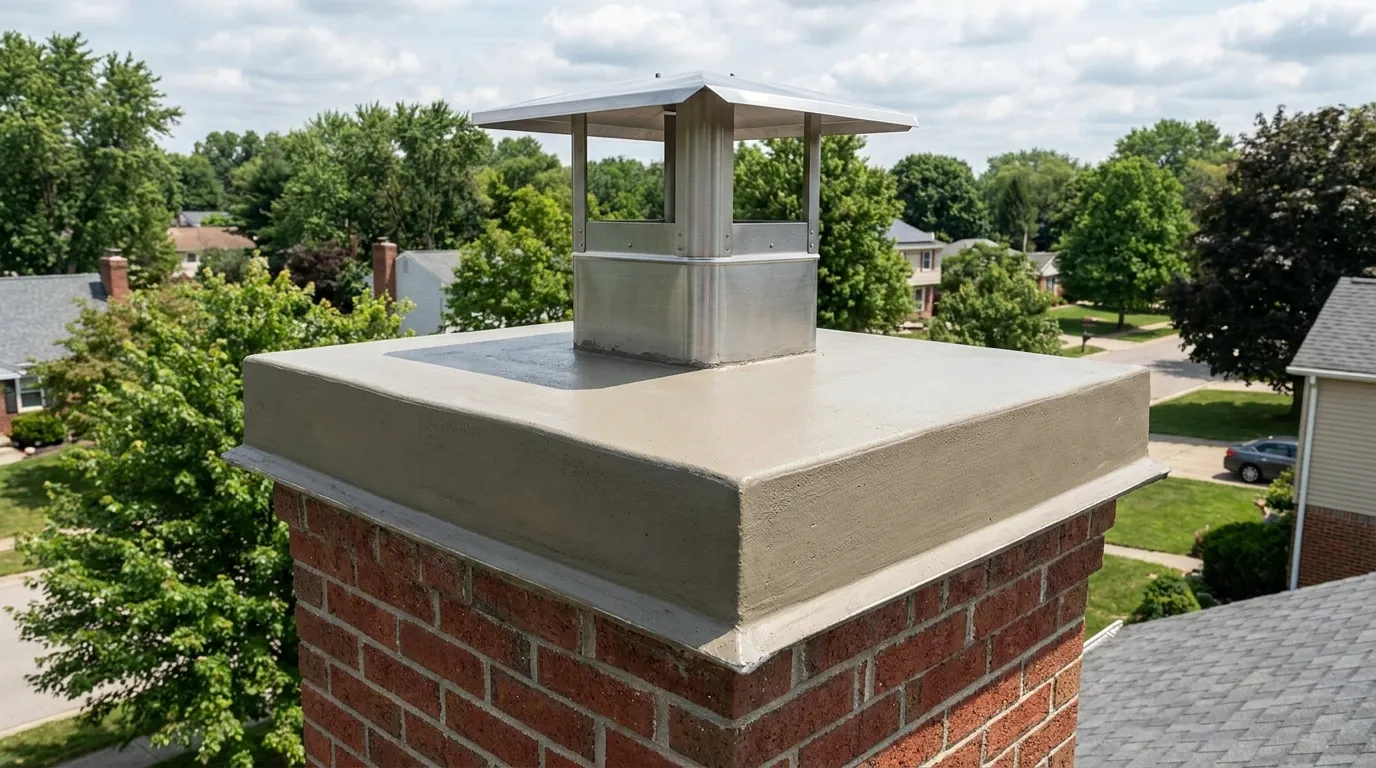
The two parts that keep water out of the top
The crown and the cap do different jobs at the top of a chimney, and both matter. The crown is the sloped slab of masonry that covers the top of the brick, built to shed rain away from the joints below. The cap is the metal cover over the flue opening that keeps rain, leaves, and animals out while still letting smoke exit. When either one fails, the top of the stack goes from the chimney's best defense to its biggest leak.
Crown repair is one of the most common chimney masonry jobs in Vancouver because our weather is so hard on that exposed slab. A cracked crown lets water seep into the brick and joints below, and once that water freezes, the cracks widen every winter. A missing or rusted-out cap lets rain fall straight down the flue, soaking the liner and the firebox. The warning signs include cracks visible across the crown, rust streaks running down the brick, water in the firebox, or a cap that's bent, loose, or gone entirely.
Because the crown and cap sit directly above the masonry you'd otherwise be protecting with tuckpointing and brick repointing, sealing the top is often the first step — there's little point refreshing joints if water keeps pouring in from above.
How crown and cap replacement is done
Replacing a crown is a pour-and-cure job; the cap is a fit-and-fasten job. They're usually done together.
-
Remove the failed crown
A cracked or crumbling crown is broken out down to the top course of brick. We check that the brick underneath is still sound before building the new crown on top of it.
-
Form and pour the new crown
The new crown is formed with a slope so water runs off, an overhang (drip edge) so runoff drips clear of the brick instead of down the face, and enough thickness to resist cracking. It's a reinforced masonry slab, not a thin smear of mortar over the top.
-
Cure and seal
The crown is kept from curing too fast so it sets strong, and the surface can be sealed against water absorption — important given how much rain the top of a Vancouver chimney takes.
-
Fit the stainless cap
A stainless steel cap is sized to the flue and fastened so it won't lift in the wind off the river. Stainless holds up to the chloride-heavy coastal air far better than older galvanized caps that rust out.
Why crowns fail fast in Vancouver
The crown is the single most weather-exposed piece of masonry on the whole chimney — flat to the sky, no shelter, catching every inch of rain. In Vancouver's wet winters it stays saturated for weeks, and freeze-thaw cycling turns small surface cracks into deep ones. A crown that was poured too thin, without a slope, or without a drip edge fails even faster, because water pools on it and runs straight down into the joints instead of dripping clear.
Caps take a different kind of beating. Chloride-heavy air off the coast and the Columbia corrodes ferrous metal, so older galvanized or steel caps rust through and either fall apart or blow off, leaving the flue open to rain. That water running down an older unlined clay flue is a common reason homes here eventually need stainless steel flue relining. A properly built crown and a stainless cap work as a pair: the crown sheds water off the brick, the cap keeps it out of the flue, and together they protect everything below from the top down.
Seal the top before the next wet season
A cracked crown or a missing cap lets water into the whole chimney. If you're seeing crown cracks, rust streaks, or water in the firebox, have the top of the stack looked at before winter rain sets in.
Serving Vancouver and nearby Clark County communities.
Frequently asked questions
What's the difference between a chimney crown and a chimney cap?
The crown is the sloped masonry slab covering the top of the brick, built to shed rain away from the joints. The cap is the metal cover over the flue opening that keeps out rain, debris, and animals while letting smoke exit. Both sit at the top of the chimney and both are needed to keep water out.
Can a cracked crown be repaired instead of replaced?
Fine surface cracks can sometimes be sealed, but once cracks run deep or the slab is crumbling, a sealer only buys time. A crown with structural cracks will keep letting water into the masonry below, so replacement is usually the lasting fix. We'll tell you which situation yours is in after looking at it.
Why does the cap need to be stainless steel?
The chloride-heavy air off the coast and river corrodes ordinary galvanized or steel caps, which rust through and can blow off, leaving the flue exposed. Stainless steel resists that corrosion and holds up far longer in Vancouver's climate, which is why it's worth the difference on the cap.
I have water in my firebox — is the crown or cap the cause?
Water in the firebox often points to a missing or failed cap letting rain down the flue, or a cracked crown letting water into the masonry. It can also be flashing lower on the stack. The top of the chimney is the first place to check, and identifying the exact entry point determines the fix.