Firebox and Hearth Masonry Restoration
Firebox and hearth masonry restoration in Vancouver, WA. Cracked firebrick replaced and refractory joints repacked for a sound burning chamber.
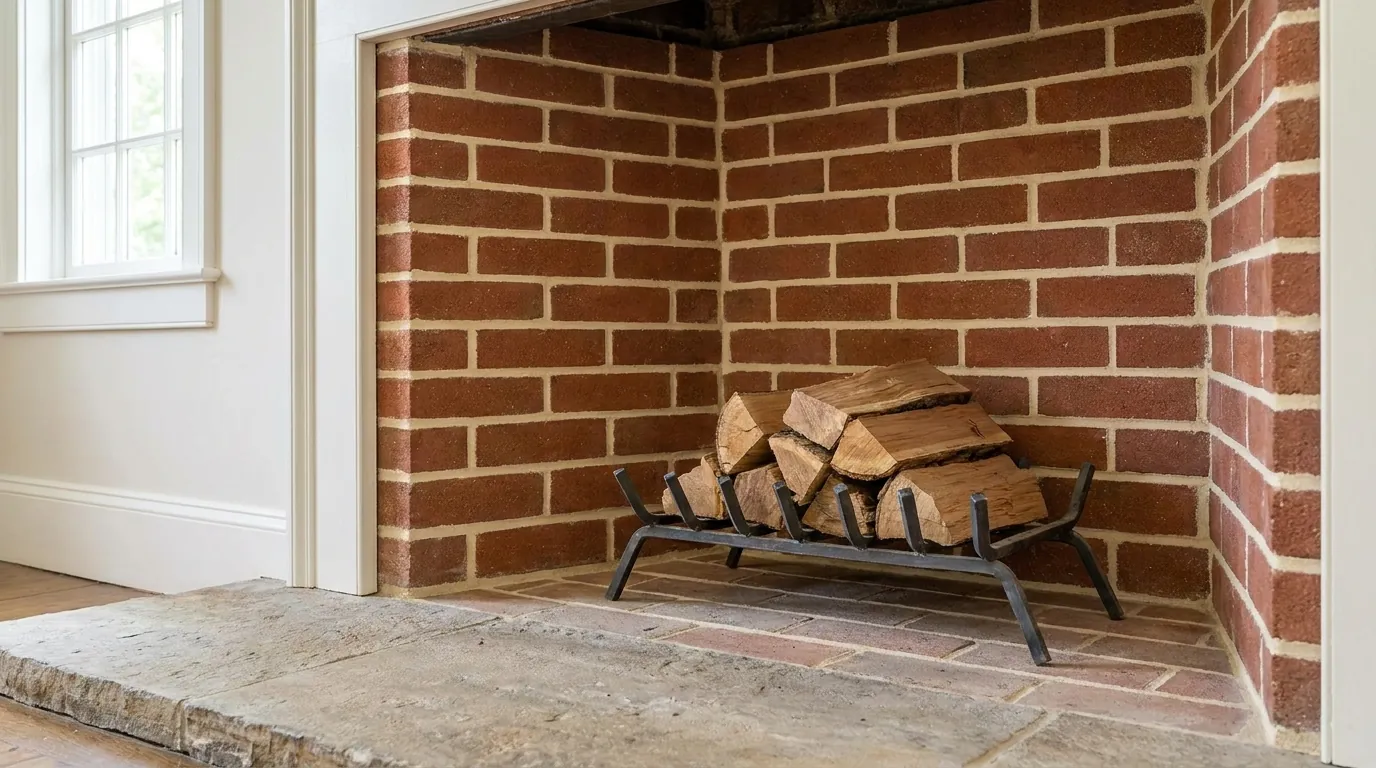
The part of the chimney that takes the fire
The firebox is the chamber where the fire actually burns, and the hearth is the masonry floor and front apron in front of it. Both are built from firebrick set in refractory mortar — materials made to survive direct, repeated heat. Over years of use that material cracks, the gray mortar between the bricks washes out or crumbles, and the walls begin to break down. Restoration replaces the failed brick and repacks the joints so the chamber is solid and shaped to burn properly again.
This work matters for more than looks. The firebox walls contain the fire and protect the framing behind the masonry, and the hearth protects the floor in front of the opening. When firebrick cracks through or joints open up, heat and embers reach places they should not. Catching that early keeps the repair small.
Signs your firebox or hearth needs attention
Most of these are visible if you look into a cold, cleaned-out fireplace with a flashlight.
-
Cracked or crumbling firebrick
Cracks that run through the firebrick, or faces that are flaking and powdering, mean the brick is breaking down under repeated heat.
-
Missing mortar between joints
Gaps where the gray refractory mortar has washed out or fallen away leave open paths for heat and need to be repacked.
-
Bulging or shifted back wall
A back wall that leans forward or has separated from the sides has lost its structure and needs rebuilding, not patching.
-
Spalling on the hearth
Pitting, flaking, or cracked masonry on the hearth floor or front apron signals moisture or heat damage that is worth addressing before it spreads.
-
Soot in unexpected places
Smoke or soot staining outside the firebox opening can mean the chamber is no longer shaped or sealed to draw fire the way it should.
How firebox restoration is done
The scope depends on how far the deterioration has gone. A full inspection sets the plan.
-
Inspect cold and clean
We examine the firebox and hearth with the fireplace cold and cleared, looking at each brick and joint and checking whether damage is surface-level or structural.
-
Remove failed masonry
Cracked firebricks and loose or washed-out refractory mortar are removed back to sound material so new work bonds to a solid base.
-
Rebuild with refractory materials
New firebrick is set and joints are repacked with refractory mortar rated for firebox temperatures, rebuilding walls and the hearth surface as needed to the correct profile.
-
Cure and inspect
Refractory mortar needs time to cure before heavy use. We explain the curing window and check the finished chamber so it is ready to burn properly.
How local conditions affect firebox and hearth work
Firebox damage is driven mostly by heat and use, but our climate plays a part too. In Vancouver's wet winters, chimneys that leak at the flashing, crown, or cap send water down into the firebox, and that moisture combines with heat cycling to break down firebrick and wash out joints faster. If a firebox is deteriorating, it is always worth checking whether water is reaching it from above.
Because of that, firebox restoration often connects to other repairs. We routinely look at whether a leak needs chimney flashing and leak repair or whether the top of the stack needs chimney crown and cap replacement to stop water from reaching the chamber in the first place. If the flue above the firebox is cracked or unlined, stainless steel flue relining may belong in the same conversation so the whole system is sound.
The other local factor is the long burning season. West of the Cascades, fireplaces and wood stoves run hard through cool, damp months, so fireboxes here accumulate heat cycles steadily. Catching cracked firebrick early keeps a repair small instead of letting the back wall fail.
Deciding on firebox and hearth repairs
Start by having the firebox inspected cold and clean, because a flashlight and a close look tell you far more than a glance during a fire. The inspection sorts the difference between a few cracked bricks and a structural problem in the back wall — those are very different jobs. It also catches whether moisture from above is part of the cause.
From there you get a written estimate describing which bricks and joints are being replaced and whether any walls need rebuilding, so the scope is clear. If a leak is feeding the damage, it usually makes sense to handle the water source and the firebox together rather than redoing firebox work after the next wet winter.
Have cracked firebrick looked at before winter
If you see cracks, crumbling mortar, or a shifting back wall in your firebox, have it inspected cold. Reach out to schedule a close look at your fireplace.
Serving Vancouver and nearby Clark County communities.
Frequently asked questions
Is a few cracks in the firebrick a safety problem?
Fine surface cracks are common and not always urgent, but cracks that run through the brick or open joints that let heat reach the masonry behind are worth addressing. An inspection cold and clean sorts cosmetic cracking from damage that needs repair.
Can you patch a firebox or does it need a full rebuild?
It depends on how far the damage has gone. Isolated cracked bricks and washed-out joints can often be replaced and repacked, while a bulging or separated back wall needs rebuilding. The inspection determines which, and the estimate describes exactly what is being done.
Why does my firebox stay damp in winter?
A damp firebox usually means water is entering above and running down the stack — often through failed flashing, a cracked crown, or a missing cap. Restoring the firebox without stopping that water tends to lead to the same breakdown again, so we check for leaks as part of the work.
Do I need to wait before using the fireplace after repairs?
Yes. Refractory mortar needs time to cure before it sees heavy heat, and using the fireplace too soon can weaken the new work. We explain the curing window for your specific repair so the chamber sets up properly before full fires.