Tuckpointing and Brick Repointing
Tuckpointing and brick repointing in Vancouver, WA — raking out failed mortar and replacing it to stop water intrusion before the brick itself goes.
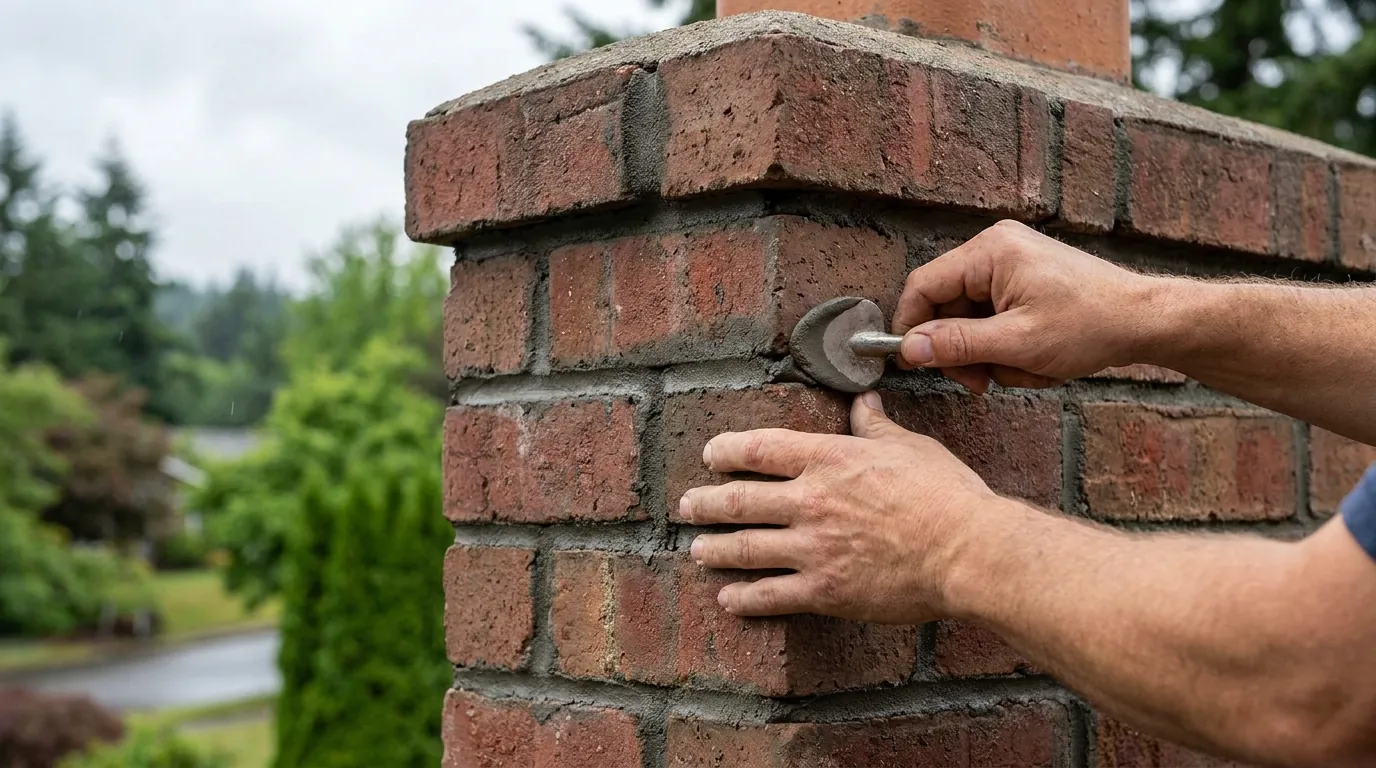
What repointing fixes and why it matters
Mortar is the first part of a chimney to wear out. It is softer than the brick by design — it is meant to take the movement and the weather so the brick doesn't have to — and after decades of Vancouver's wet winters and freeze-thaw cycling it erodes, cracks, and falls out of the joints. Repointing (also called tuckpointing) is the process of raking out that failed mortar and packing in fresh mortar, restoring the joint before water finds its way behind the brick.
The warning signs are visible from the ground if you know what to look for: joints that have receded so the brick edges stand proud, sandy mortar crumbs collecting at the chimney base, hairline gaps you can slip a fingernail into, or dark staining where water is tracking through. Left alone, open joints let water soak into the masonry, and when that water freezes it pries the brick apart — which turns an affordable joint repair into a candidate for a chimney rebuild above the roofline.
Repointing is the most cost-effective chimney masonry repair there is precisely because it catches the problem early. The goal is to replace the mortar while the brick is still sound, so the brick never reaches the point of needing replacement.
How we repoint a chimney
Good repointing is as much about removal and matching as it is about the new mortar.
-
Assess the joints and mortar
We check how deep the erosion goes and read the existing mortar — its color, texture, and hardness — so the new mix blends in and behaves like the original rather than fighting it.
-
Rake out the failed mortar
Old mortar is cut out to a consistent depth, typically about twice the joint width, so the new mortar has enough bite to hold. We work carefully around soft historic brick to avoid chipping the faces.
-
Match the mortar mix
The replacement mortar is matched to the brick's hardness. Soft historic brick needs a lime-rich, softer mortar; a too-hard modern mix would transfer stress into the brick and cause spalling — the opposite of what repointing is meant to prevent.
-
Pack and tool the joints
Fresh mortar is pressed into the cleaned joints in layers and then tooled to match the original joint profile, which both sheds water and keeps the look consistent across the stack.
-
Cure and clean
New mortar is kept from drying too fast so it cures strong, and the brick faces are cleaned of mortar haze once the joints have set.
Why Vancouver mortar fails the way it does
The pattern we see on Vancouver chimneys comes straight from the climate. Wet winters saturate the mortar, wind-driven rain forces water into even hairline joints, and overnight freeze-thaw cycling expands that trapped moisture until the joint face crumbles away. On the many older homes in and around Vancouver, the original mortar was lime-based and soft, and when past repairs used a hard modern mix, the stress got pushed into the brick instead of the mortar — which is why you sometimes see spalled brick right next to joints that were 'fixed' years ago.
That history is why matching matters so much here. Getting the mortar hardness right is the difference between a repair that quietly protects the brick for years and one that accelerates the damage. Repointing also pairs naturally with sealing the top of the stack: once the joints are sound, a solid crown and cap keep water from re-entering, which is where chimney crown and cap replacement comes in. When joints are already open and brick has begun to move, repointing may no longer be enough and we'll say so plainly.
Catch failing joints while they're still cheap to fix
If you're seeing receding joints or mortar crumbs at the base of your chimney, repointing now avoids far bigger work later. We'll look at the joints and tell you honestly whether repointing is the right step.
Serving Vancouver and nearby Clark County communities.
Frequently asked questions
What's the difference between tuckpointing and repointing?
The terms are used almost interchangeably for the same core work: removing failed mortar and packing in new mortar. Strictly, tuckpointing refers to a two-tone decorative finish, but most homeowners and contractors use it to mean mortar joint repair in general. The important thing is that the old mortar is properly raked out and the new mortar is matched to the brick.
How do I know when my chimney needs repointing?
Look for mortar joints that have receded below the brick face, sandy crumbs collecting at the chimney base, gaps you can fit a fingernail into, or water staining. These all mean water is getting into the joints, and repointing restores them before the brick itself is damaged.
Why does matching the mortar mix matter so much?
Mortar should be slightly softer than the brick so it absorbs movement and weather. If a hard modern mix is used on soft historic brick, stress transfers into the brick and causes the faces to spall. Matching hardness is essential on older Vancouver chimneys and is a common point where past repairs went wrong.
Can repointing fix a chimney that's already leaking?
If the leak is coming through open mortar joints, repointing can stop it. But leaks often come from flashing or the crown at the top of the stack, so the source needs to be identified first. Repointing addresses the joints; it won't fix a leak that's originating somewhere else.