Chimney Rebuild Above the Roofline
Rebuilding the exposed section of a chimney above the roofline in Vancouver, WA — when spalled brick and failed mortar mean repointing is no longer enough.
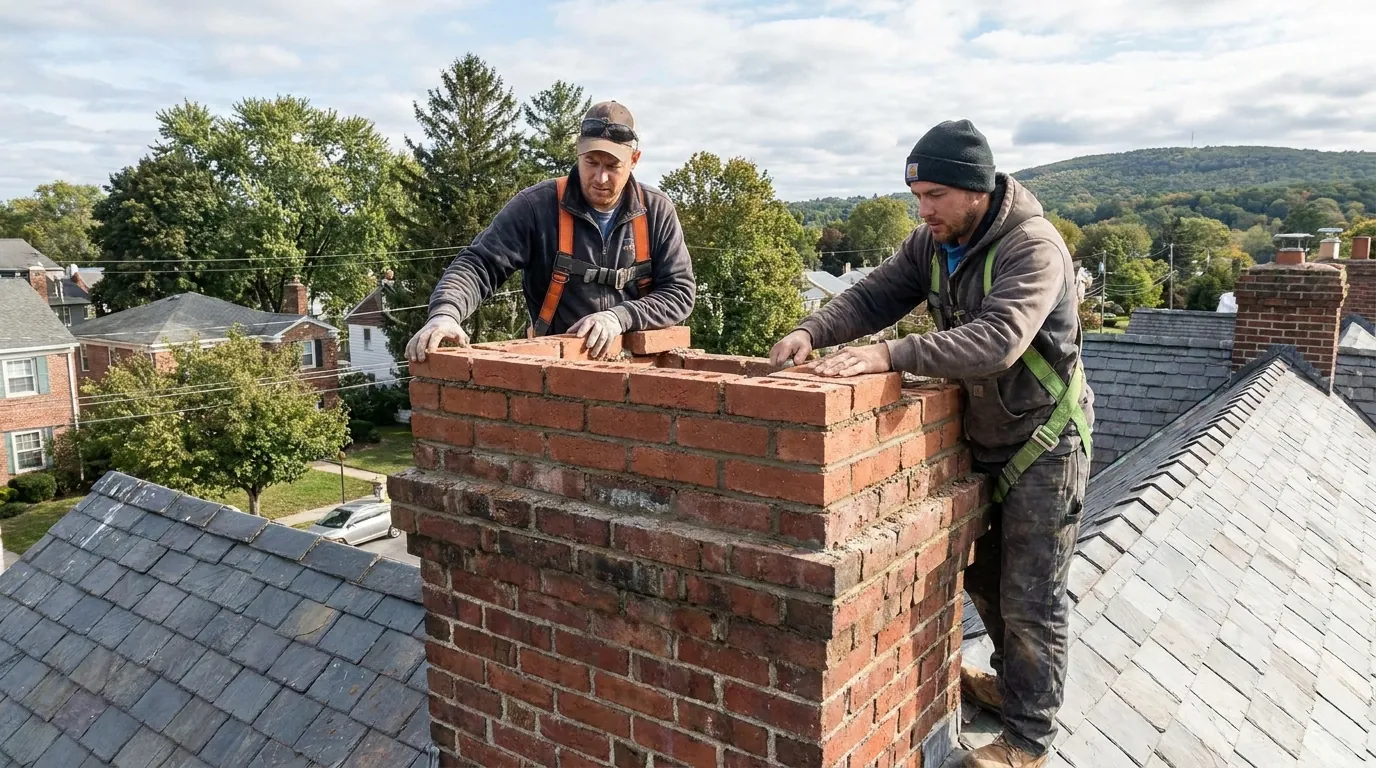
When a rebuild is the right call
The part of a chimney that sits above the roofline takes the full force of Vancouver's weather. There is no eave to shield it, no attic warmth behind it — just brick and mortar facing wet winters west of the Cascades, wind-driven rain off the Columbia, and the freeze-thaw swings that pry moisture into every joint. Over decades that exposure breaks down the masonry from the top down, and on older Vancouver homes the brick above the roof is often the first part of the chimney to fail outright.
A rebuild above the roofline means taking the exposed stack down to a sound course of brick — usually at or just above the roofline — and laying it back up with new brick and fresh mortar, a new crown, and flashing tied back into the roof. It is a bigger job than repointing, and it is only the right call when the damage has gone past what joint work can fix. Common triggers are brick faces that have spalled away (the outer skin popped off, leaving a rough, crumbling surface), a stack that leans or bows, or mortar joints so eroded that whole bricks have gone loose.
If you are not sure whether your chimney needs a rebuild or whether tuckpointing and brick repointing would hold, that is worth sorting out before anything else. Repointing addresses mortar; a rebuild addresses brick that is no longer structurally sound. We look at both the brick and the joints before recommending one over the other.
What a rebuild above the roofline involves
Every chimney is a little different, but a typical above-roofline rebuild follows these stages.
-
Inspect and set the teardown line
We examine the stack to find where sound masonry begins. Brick below the roofline, protected by the attic and roof, is often still solid, so the rebuild usually starts at or near the roofline rather than going all the way to the firebox.
-
Dismantle the damaged section
The spalled or loose brick comes down by hand, course by course, with the roof protected below. Salvageable brick is set aside where the look matters and the brick is still sound; badly spalled brick is replaced.
-
Relay the stack
New courses go up with a mortar mix suited to the brick — softer historic brick needs a softer mortar so the joints, not the brick faces, take the movement. We match the original brick bond pattern and size as closely as the available brick allows.
-
New crown and cap
A fresh poured crown with a drip edge and overhang sheds water away from the joints, and a stainless cap keeps rain and animals out of the flue. These are built into the rebuild rather than added as an afterthought.
-
Flashing and weather seal
The flashing is tied back into the roof so water runs onto the shingles instead of down behind the brick, which is the single most common source of chimney leaks on Vancouver roofs.
How Vancouver conditions change the work
Freeze-thaw cycling is the main driver of above-roofline damage here. Water soaks into porous brick and mortar during our wet winters, then expands when temperatures drop overnight. That repeated expansion pops the faces off soft brick — the spalling you see as flaking, pitting, and rust-colored crumbs at the base of the stack. Once the outer skin is gone, water gets in faster and the cycle accelerates, which is why a stack can go from cosmetic to structural in a few seasons.
Chloride-heavy air drifting in from the coast and the river adds to the breakdown, attacking mortar and any ferrous metal in older crowns and caps. Dry eastern-slope summers then bake the masonry, so the brick is cycling between soaked and parched all year. For a rebuild to last, the new mortar has to be matched to the brick's hardness and the crown has to be poured to actually shed water — a flat, cracked crown just funnels rain back into the joints you rebuilt. A new crown is often paired with chimney crown and cap replacement specs so the top of the stack is sealed as a unit.
Not sure if it's a rebuild or a repair?
If the brick above your roofline is flaking, leaning, or losing mortar, have it looked at before another wet winter sets in. We assess the stack and walk you through the options in plain language.
Serving Vancouver and nearby Clark County communities.
Frequently asked questions
How do I know if my chimney needs a full rebuild instead of repointing?
Repointing fixes eroded mortar joints while the brick is still sound. A rebuild is needed when the brick itself has spalled, cracked, or shifted — if faces are popping off or the stack leans, new mortar alone has nothing solid to bond to. An on-site look at both brick and joints tells us which applies.
Can you match the existing brick on an older Vancouver home?
We match brick size, color, and bond pattern as closely as the available stock allows, and salvage sound original brick where the appearance matters. Exact matches on very old brick can be hard to source, so we discuss options before starting so you know what the finished stack will look like.
Why only rebuild above the roofline and not the whole chimney?
The exposed section above the roof takes the worst of the weather and fails first, while brick below the roofline is sheltered by the attic and roof and often remains solid. Rebuilding only the damaged portion addresses the problem without the cost and disruption of taking down sound masonry.
Will the rebuild stop my chimney from leaking?
A rebuild that includes a properly poured crown, a cap, and flashing tied into the roof addresses the main water paths at the top of the chimney. If leaking continues, the source may be lower down, which points to flashing or joint work rather than the stack itself.